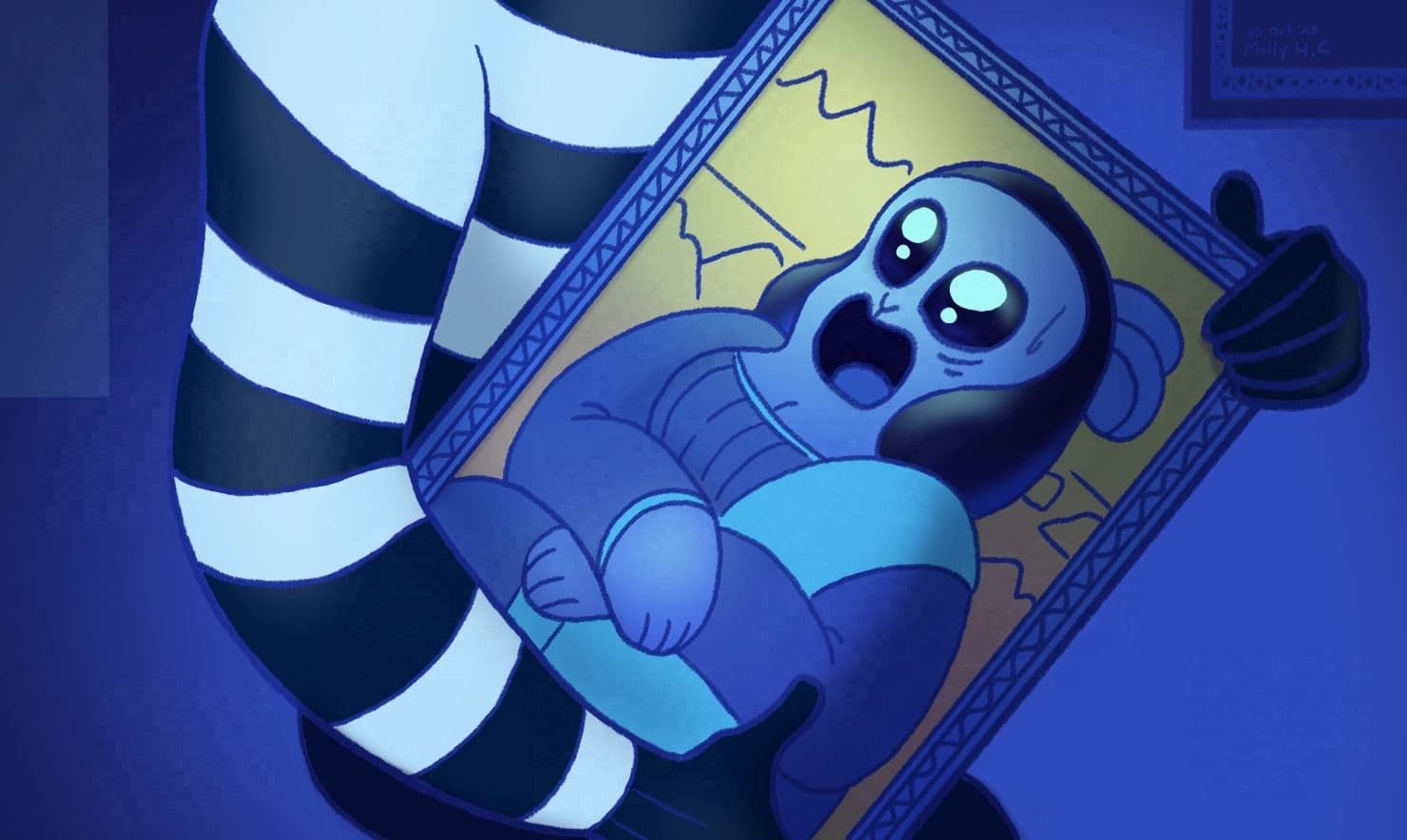
Stop! Art Thief!
4 Steps to Tackle Online Art Theft
04.03.2026
The Wacom Yuibunny & Deviant Legal
You’ve just seen your design on a Redbubble shirt, an Etsy mug, or a viral Instagram account with zero credit! Aaaggghhh! What do you do???!!!
First, take a deep breath…
Will your art get stolen if you post it online? You have to assume so. But don’t let that stop you from sharing your work! Posting your digital art online is how fans and creative collaborators can discover you. Uploading art to the internet comes with risks, but the positives outweigh the negatives in every way.
Having said that, the Wacom Yuibunny (yuify.com) and René Otto of Deviant Legal (deviantlegal.com/team/rene-otto) teamed up to provide you advice from both a practical and legal perspective. Here are four steps for what to do when your digital artwork gets stolen online.
Note: you should always check the rules of the platform you are working on for specific rules or steps regarding copyright claims and takedowns.
Step 0: Before you Post, Protect Your Proof of Authorship!
Your creative works are often legally protected by copyright, which gives you the right to publish and distribute your work. For copyright protection you don’t have to do anything, except create the work. However, that means that it is also very important that you can prove that you actually made it, just in case that is ever disputed.
- Sign and date your work
A time-tested defence in proving your authorship. However, signatures can be removed using cropping, digital art tools or AI. It might not be enough protection in the modern day.
- Register your Work (Yuify)
Registration makes it way easier to prove your authorship. Yuify (yuify.com) embeds a hidden micromark in your digital art, which is resistant to cropping, screenshotting and editing. Compatible with major digital art software, it’s an artist-friendly way to prove your authorship. Additionally, it also makes it more discoverable in case someone has made something based on your work, because the micromark may still be present this derivative work.
- Document your Creation Process
It is important to save the digital files of your creation and other steps in the creative process. By showing that you have access to non-public files used in the creative process, you can illustrate that you have made the work yourself.
- Post Work First on a Service with a Date Timestamp
Most art sites like Artstation, Deviantart and Instagram automatically timestamp uploads. This will mean the earliest instance of the work being published online will be under an account that you control: strong evidence you are the original creator.
Step 1: Informal Takedown
At the beginning, assume ignorance before malice. Ask politely but firmly for takedown with documented proof that you are the original creator. You could alternatively ask for credit, if that is sufficient to you. Give them the chance to be educated and fix the wrongdoing. Moreover, if they continue to do the wrong thing after this warning, this builds a case of bad faith on behalf of the infringer. This will strengthen your case if the situation escalates.
Pro tip: Screenshot evidence every step of the way with timestamps and save all evidence in a dedicated folder, in case things escalate.
Example:
"Hello (infringer)!
I noticed you posted a piece of art I created on your (account/website/platform): (link/screenshot to unauthorized use)
I’m glad you liked my artwork! But please, (credit the original artist when sharing art. My handle is @(yourhandle), I would appreciate it if you included this in your post.) / (remove the artwork from your platform, as it is an unauthorized upload of my work.)
Thank you! – (your name)"
Step 2: Platform / Hosting Provider Takedown
If asking nicely fails, report the post to the platform or website hosting the unauthorized artwork. Platforms can be liable for violations of intellectual property laws that happen in their domain in case they do not act promptly after being notified of unauthorized creations being published via them. Therefore, sites like Instagram, Etsy and Redbubble have reporting tools, email addresses or contact forms for exactly this purpose. Mostly this can be found when searching the pages regarding intellectual property, DMCA (Digital Millennium Copyright Act) or DSA (Digital Services Act) on the website. Those last two are the name of the relevant laws for illegal content through platforms. It is likely they will remove the unauthorized art upload if presented with valid evidence.
In case the work is published through someone’s own website, you could also reach out to the hosting provider and tell them that they host a website which infringes your rights.
Example of a notice which complies with the requirements based on the DMCA & DSA:
"Hello (owner of infringing platform / hosting provider),
I am the original creator of this artwork, which was posted to (account/website/platform): (link/screenshot to unauthorized use)
My original work: (link to original post/ Yuify page)
My work has been uploaded without permission or credit, which violates copyright. Please (remove it immediately.) / (provide credit and a link to the original)
I am providing this notice in good faith and with the reasonable belief that my rights are being infringed.
Under penalty of perjury I certify that the information contained in the notification is both true and accurate and I have am the owner of the copyrights involved.
For further information I can be reached through (contact details)
Thank you! - (your name)"
Step 3: Threat of Legal Action
If the infringer continues to profit off your art or damage your brand, it may be necessary to prepare for legal action. Give the infringer a final warning and tell them that legal action is the next step that you intend to take.
Example:
"Hello (infringer),
I am contacting you once more about the unauthorized use of my artwork on your (account/website/platform): (link/screenshot to unauthorized use)
My original work: (link to original post/ Yuify page)
This use has occurred without my permission or compensation and therefore constitutes a violation of my copyright.
I have previously contacted you on (insert dates) requesting removal of my work, but as of today the artwork remains accessible. This letter serves as a final notice before I pursue further action.
I demand that you immediately remove all instances of my artwork from your website and servers and confirm in writing within 7 days that the material has been taken down.
If I do not receive confirmation of removal within 7 days from the date of this message, I will proceed with filing formal copyright infringement complaints and exploring legal remedies, which may include seeking damages and legal costs.
Sincerely,
(your name)"
Step 4: Legal Action
It’s rare that things go this far, but it’s time to get a lawyer involved. Your lawyer will guide you through this process. NEVER, EVER impersonate a lawyer and send a formal cease and desist yourself! Leave it to the professionals.
A lawyer will often first send a letter or go through the steps above themselves. The reason for this is that lawyers are sometimes taken more seriously than messages sent by you. In case this does not lead to any result, a good lawyer will discuss with you the next steps (and associated costs). So you don’t have to be scared that reaching out to a lawyer leads to immediate costs or an instant court case. Law firms such as Deviant Legal also offers free legal consultations to determine what the best steps in your situation would be. https://deviantlegal.com/free-consultation
Do I Have to Take Legal Action? That Sounds Scary!
Usually, no. You are the one who has to decide whether you want to take legal action and if you do, you are the one who decides when you want to stop. Court cases are rare unless there’s serious financial or brand damages to the artist.
Remember though that in order to successfully claim something in court, you will need to present evidence. It is vital that you document your evidence at every step of the case, even if it ultimately does not escalate. Document your proof of authorship (using tools like Yuify), screenshot the art theft and document the measures you took to have the unauthorized use taken down with time stamps. Your future self will thank you.
When you Spot Stolen Art Online
- Inform the original artist and send them a screenshot.
- Politely inform the infringer who the original artist is and remind them how important it is to always credit the original artist.
- NEVER buy stolen art! Support creators by liking and sharing their work, buying directly from them or commissioning them. That way, we all ensure the creativity community can continue to thrive!
Summary
Note: you should always check the rules of the platform you are working on for specific rules or steps regarding copyright claims and takedowns.
- Step 1 - Informal Takedown: Polite but firm request for credit/removal.
- Step 2 - Platform / Hosting Provider Takedown: Contact the platform directly requesting removal of artwork.
- Step 3 - Threat of Legal Action: A final chance to comply or you will have to take legal action.
- Step 4 - Legal Action : A formal demand is sent by a lawyer to stop the unauthorized use of your artwork.
Legal perspective provided to you by René Otto of Deviant Legal: deviantlegal.com/team/rene-otto
What should we write about next? Join the conversation!
Tell the Wacom Yuibunny on Discord!
Summary
You’ve seen your design on a Redbubble shirt, an Etsy mug, or an Instagram account with zero credit! Here's 4 steps to follow when your digital art gets stolen.